Showing posts with label Salida. Show all posts

Sunday, May 6, 2018

The Redemption of Ernest Christison Article in the Mountain Mail

Virgil Ernest Christison's grave marker in the Fairview Cemetery, Colorado Springs
I've been enjoying the articles written by Joy Jackson, archivist at the Salida Regional Library, about Salida stories of the past in her column, "At the Library." My friend, Margy, sent me copies of the four-part Cattle Thieves series published from November 2017 to February 2018 in the Mountain Mail. And a couple of other friends sent me links to the articles. 

The final article is "The Redemption of Ernest Christison." It is fun to see my great-great-uncle, Ernest, have his own headline and article. Jackson refers to newspaper articles from 1883-1884 which I have also used extensively in my research. It is interesting to read someone else's conclusions. 


I thought I would fill in a little family history information. Virgil Ernest Christison was the second oldest son of Judge Wilburn and Elizabeth Christison. In 1879, he married Nancy Jane Taylor. Their first child, John, was born in 1882. Their daughter, Grace, was born in August of 1883 before Ernest went to jail in Buena Vista.

Ernest was sentenced to two years in the Colorado State Penitentiary and was released two months early for good behavior in March of 1886. Ernest and Nancy had two more daughters, then two more sons (the first Roy, born in 1893, probably the baby mentioned in the article) and finally, a daughter, Helen, born in 1904.


Ernest died in 1939 in Colorado Springs. His obituary reads in part, "Virgil E. Christison, 86, who came to Colorado as a youth and engaged in the mining and freighting business shortly after the Civil War, died yesterday at the residence of a daughter, Helen." 

Monday, November 4, 2013

Freedom in January

Barry Ward recently released his new CD, Lonesome County Road. John and I are especially honored that Barry recorded the song we wrote, "Freedom in January." The song is a little bluegrass number telling the story of Ernest Christison's (my great-great-uncle) jail break in Buena Vista, Colorado in 1883.

Former Flying W Wrangler Joe Stephenson added the perfect fiddle part to the song for my fiddle-playing outlaw. And Ernie Martinez, nominated for the 2013 Instrumentalist of the Year by the Western Music Association, played the dobro, intoning a lonesome train whistle on the break.


"Freedom in January" tells the story of Ernest Christison who, along with ten other prisoners, knocked out a hole in the brick wall and "broke jail." The jail is now the school administration offices. At the back of the building, you can still see where the bricks were replaced.


The Buena Vista Democrat (http://ColoradoHistoricNewspapers.org)

Ernest Christison and Albert Sweeny ran half a mile to the Arkansas River. This photo was taken 126 years later on the anniversary of the jail break. Fortunately for the men, there wasn't snow on the ground so they couldn't be tracked. They crossed the river and hid on the hill a while, and then started walking south to Salida. They crossed the river again near Nathrop. Thinking of the men walking through the freezing cold water prompted the line, "Freedom in January is worth the frost."

Ernest and Albert made it to Thomas Cameron's home just north of Salida, where they found food, a Winchester, and a place to sleep. But Cameron's was being watched and the men were rudely awakened by "a shotgun barreled side by side" shoved in their faces. After they were captured, the men returned to Buena Vista on the train with an armed guard.


Lonesome County Road is available for order at http://BarryWardMusic.com/new-cd/  Be sure to check out Barry's schedule and see him in concert when he is in your area
. 

Thursday, July 7, 2011

Switching From Nonfiction to Fiction

Jane Kirkpatrick sent these salt and pepper shakers to me. They arrived yesterday. Aren't they a hoot? Jane has been a special encourager to me in writing my book. And the first person I turned to when I seriously considered changing the genre of my book. I know I can trust Jane's advice. I have struggled for three years attempting to write a creative nonfiction book with Ernest Christison as the main character. When I finished the rough draft, I felt like I had two books - one nonfiction and one fiction. It was disjointed; it had too many holes that didn't fit into literary nonfiction and I had too many questions to make a judgement for nonfiction.

Ernest's story wouldn't let me go, but another story began to overpower his story. Mary Watkins, a Quaker schoolteacher from Ohio takes on the cattlemen who hanged her husband. What a powerful story! I wrote a part of Mary's story as a short story a couple of years ago and started a novel about Mary last November during NaNoWriMo (write a novel in a month). As I struggled with how to fix the nonfiction book, I opened up the file of the novel I had started. Guess what? It was good. And I seriously considered what the book would look like as fiction. After talking with Jane, I had no qualms about putting the creative nonfiction behind me and writing a historical fiction novel with Mary Watkins as the protagonist. Ernest will also be a main character, so his story will be told, too. The story is true, the events are true and the dialogue and additional scenes will all point to the truth while adding depth to the characters.


Fiction is a new world to me. Now I am reading Writing Fiction For Dummies by Randy Ingermanson and using his Snowflake method for writing a book. I am also reading books on characters and making them come alive. The only thing I don't have to learn about is the plot, that's already set!

P.S. If you haven't read any of Jane Kirkpatrick's books, run to the nearest bookstore or library! Jane writes historical fiction based on real women's lives. Her latest book is A Daughter's Walk based on the true story of a mother and daughter walking across the country in 1896. For more information, visit her website http://jkbooks.com

Friday, March 4, 2011

Happy Birthday, Colorado!

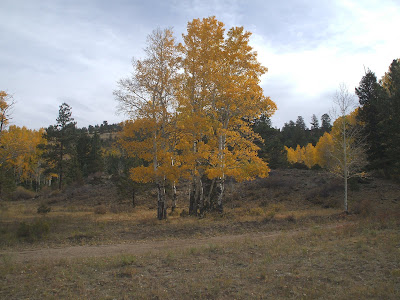
Aspen Near Poncha Pass

The Arkansas River from the F Street Bridge in Salida

San Luis Valley near Villa Grove

150 years ago this week, one month after Kansas became a state, the western part of Kansas became Colorado Territory
on February 28, 1861. I thought I would celebrate by sharing a few of my favorite pictures I took last spring when my daughter and I took a trip to Salida.

My great-great-grandparents, Wilburn and Elizabeth Christison came to Colorado Territory with their six children in a wagon pulled by oxen in 1861. Wilburn voted in the first Territorial election held that fall, voting in the Lost Canyon precinct at Cash Creek. My husband's great-great-grandparents, the Eplers, also came to Colorado Territory, arriving by train in 1874 and settling in the newly-formed Elbert County. While the Christisons couldn't stay put in one place, my children are the 7th generation of John's family to live in Elbert County.

As you can see, I have many reasons to celebrate Colorado Territory's birthday.
Happy Birthday, Colorado!


Friday, September 3, 2010

Photograph Research Trip

I made a quick trip to Salida on Wednesday and Thursday. On Wednesday morning I talked with Joyce Reno, the Chaffee County Clerk. She answered my questions about land records and was very helpful. I was reminded again that when you can't find a record in one place, it might show up in another. Last month I had contacted the National Archives in Denver about land patents. The man who helped me said he'd look up the information, but later called to say he couldn't find the book. I mentioned this to Joyce and she said, "We've got it right here." It helps to know I've looked at all of the records and I'm not overlooking something with the land records.

In the afternoon, I visited the Salida Regional Library to look at the Bob Rush photo collection. I didn't find any photos pertinant to my presentation or book, but they were fun to look at! Most of the collection is available digitally on the Salida website.

As I was leaving the library, Jeff Donlan and I were talking. It dawned on him to ask if I'd talked to Dick Dixon. I said I hadn't, but he was on my list. Dick has written book about Turret and the Salida area. He also has a fabulous collection of Salida photos. Jeff picked up the phone and called Dick at the Mountain Mail newspaper office. Before I knew it, I was having the most amazing conversation with Dick at the newspaper office. Here was a man who knew the historical Salida people I've been living with for the past three years. It was wonderful to talk to someone who knew them as well as I did. Just like talking with an old friend. You will be seeing some photos from Dick's collection show up in my book. Isn't that exciting?


I stopped at the Canon City History Center on my way home. And found some more great photos. It's fun to start collecting photographs for the book!

The book isn't finished yet. Working on the Ed Watkins presentation in Salida is helping me. I tend to tell the story in circles, I tell about one event then circle back to another. Putting the Powerpoint in order is helping me gain focus. And I'm picking up on a few things I hadn't caught before.

Monday, August 16, 2010

Ed Watkins and The Cattle Thieves Presentation

Join me on Sunday September 19 at 2:00 p.m. at the Salida Regional Library for an afternoon of storytelling about "Ed Watkins and the Cattle Thieves." The story of Ed Watkins and his cattle rustling gang (which included Ernest Christison) has been told for over 125 years in central Colorado. Watkins was hanged by a masked mob in Canon City on August 11, 1883, but the story didn't end there. Over the next year there were more arrests connected with the cattle thieving, a muder or two, a jail break, and court cases with surprising outcomes.

I will be telling the story my research has revealed at 2:00 p.m., and after a short break at 2:45, more details and a time for questions and discussion will continue at 3:00 for those interested in staying.

For more information about the story, click on the tab Cattle Thieves above this post.

Saturday, October 3, 2009

Prospecting and Wild Strawberries: A Childhood Memory

Ken Christison, Sr., Elizabeth Christison, Gayle Christison, Brian Christison

Randy Seaver, author of the Genea-Musings Blog, has a regular Saturday Night Genealogy Fun challenge for geneabloggers. Tonight's challenge is to write one of your most vivid childhood memories. And tonight I accept the challenge!

My recent gold panning experience brought back memories of my Grandpa Christison. I wish I could say many memories, but I wasn't around him enough to have many memories. Therefore, the ones I do have tend to be pretty vivid to me.

When I was a child, Grandpa Christison lived in Salida. He worked as a deputy sheriff for Chaffee County, but spent his spare time prospecting or working his mining claim up on Poncha Pass. I remember camping at our camping spot on Spring Creek one time when I was seven or eight. My Dad drove the International Scout up the mountain trail until we found Grandpa's old green International pickup. I don't really remember anything about the claim other than Grandpa doing some shoveling. There wasn't a big hole or anything. Another memory is of Grandpa making pancakes and cooking them on the griddle over the open fire. I remember being amazed because I didn't know you could make pancakes when you were camping!

My most vivid memory is of Grandpa taking us hiking up past his claim; following Spring Creek until we found the spring, the very beginnings of the creek. Surrounding the creek were wild strawberries--the tiniest little berries that packed a strawberry punch like I'd never tasted before! We ate strawberries and knelt down by the small creek, cupped our hands and drank water from the cold mountain spring. I can tell you I've never had strawberries that tasted so good.

This memory came back to me when Shirley and Larry Weilnau took John and I hiking at Cache Creek. As we hiked up the mountain a ways, my eyes were on the ground looking at the wild strawberry plants. Even though I knew I wouldn't find any strawberries in September, I still couldn't stop myself from hoping one bright strawberry might reveal itself to me. It dawned on me that prospecting and wild strawberries will forever be entwined in my mind.

Grandpa Christison and his wife, Elizabeth, moved to Oregon when I was in the 4th grade in 1974. The above picture was taken in their yard in the trailer park in Salida when we said good-bye before they moved. It's the only picture I have of Grandpa Christison, Elizabeth, my younger brother, Brian, and I together. Actually, it's the only picture I have of Grandpa when I was young. I wish we had pictures of Grandpa at his claim or camping or cooking pancakes.

Grandpa Christison died in 1994. We had a family memorial for him at Spring Creek in 1995 and his four children drove from California, Oregon, and North Carolina to remember him at one of his favorite places.

So, here is to prospecting, wild strawberries, pancakes, Spring Creek, and Grandpa Christison! Thank you for the special memories.

Sunday, August 9, 2009

Ann Parker's Booksigning

Ann Parker, Susan Tweit, Gayle Gresham
(Giving our WWW sign)
Ann, Susan and Bev McGuire

Ann Parker, author of the Silver Rush Mysteries, had a booksigning at the Book Haven bookstore in Salida last Wednesday. Ann is a member of Women Writing The West and I had the privilege of meeting her last fall at the San Antonio conference. When I learned about her book tour, I knew I had to go to Salida (even though she had a signing in Manitou Springs). I invited Bev to go with me and arranged a motel room to stay the night.

Ann's booksigning began at 5:00, but we met at 3:00 at a coffee shop to visit with Ann and Salida WWW'er Susan Tweit. We talked nonstop for an hour! It was good to hear about Ann and Susan latest projects. Ann is a woman after my own heart-- rather than enjoying the Salida attractions that day, she'd spent her time in the basement of the Salida Regional Library looking at old newspapers on microfiche!

Ann and Susan were anxious to hear how my book is coming along and more about the cattle rustling story. Ann gave me some great insights into the "Found Dead" article from a mystery writer's perspective. They were both so encouraging to me.

Bev and I had a few minutes and stopped in at the Lallier Pharmacy. I squealed with delight when I found a Cross A Ranch handcream display. Marge Brown, the creator, lived in the community I grew up in before moving to Wyoming and making her handcream. She's a good family friend and now lives in Salida. If you want a good heavy-duty handcream and other products, be sure to check out her website.

The Book Haven is a charming bookstore on F Street in downtown Salida. Be sure to stop in a visit if you are ever in town. It was packed with people for the signing and Ann gave a great talk about Leadville and how she began writing the Silver Rush Mysteries. It was so fun to see two more ladies from Women Writing The West - Elaine Long and Nancy Oswald. I hadn't met Elaine before, but had e-mailed with her. Can't wait to read her contemporary fiction book. I've known Nancy a couple of years and was excited to see her. She's had two juvenile fiction books published by Filter Press.

After the booksigning, Ann, Bev and I walked along the River Walk for a few minutes, then Ann headed up to her next stop - Leadville. It was such a wonderful evening!


Wednesday, February 25, 2009

Baxter Stingley's Murder

"BRAVE BAXTER
MEETS HIS DEATH AT THE HANDS
OF A BAD CITIZEN"
shouted the headlines of the November 3, 1883 Salida Mail.

Five months after being shot by Thomas Neinmyer, Salida Marshal Baxter Stingley had recovered and was back on the job. He heard that Frank Reed and Ernest Christison were at the Arbour's Variety and Dance Hall. Stingley had an arrest warrant for both men for stealing cattle. Reed had told everyone he wasn't going to be arrested and lynched like Ed Watkins had been. So, when Baxter Stingley held his gun on Reed and said, "I have a warrant for your arrest," Reed pulled his gun out and shot Stingley. (Another report says Reed shot Stingley with Stingley's gun.) Reed ran for the back door with Stingley following him and both men were shooting. After Reed exited the back door, Stingley stopped and Mr. Arbour asked him if he was shot. Stingley said, "Yes, he has shot me three times." They laid him on a table, removed his boots which were filled with blood, and he died shortly after.

Frank Reed escaped and was never captured. Ernest Christison was arrested early the next morning and taken by train to the jail in Buena Vista.

Baxter Stingley's funeral was held at the Opera House. The funeral procession included the Knights of Pythias lodge and the fire company. Baxter Stingley's murder was also reported in the New York Times.

If you are related to any of the people mentioned in this post, please contact me at GayleGresham@gmail.com

Wednesday, January 14, 2009

Baxter Stingley, Salida Marshal

Watch That Saved Baxter Stingley's Life

On Memorial Day of 1883, Marshal Stingley and his deputy, James Brathurst, went to Bender's Saloon where a fight had broken out. As they tried to arrest Tom Evans, he lunged at Marshal Stingley with a knife. Both Stingley and Brathurst shot at Evans and he was killed. Then Thomas Neinmyer (or Ninemyer), one of the brawl participants, began to shoot as he left the building. He shot and killed Deputy Brathurst and Gannon (a bystander). He also shot Baxter Stingley, who survived with a punctured lung.

Neinmyer left on horseback and a group of men pursued him. Neinmyer shot and killed one of the men following him, W.H. Brown. Eventually the group, led by William Goring, overtook Neinmyer and captured him. Neinmyer was arrested and taken to the Buena Vista jail.

It took several months for Baxter Stingley to recover from his wound. J.S. Boon was appointed temporary Marshal with Eli Chenoweth as his deputy.

While Stingley recovered, he asked Henry Weber to visit him. During the visit, Stingley showed Weber the double-case silver watch that Weber had loaned him and that Stingley had been carrying when he was shot. According to Weber, "A bullet had struck it, and had crashed thru to the last case, which it dented badly. Stingley was carrying the watch in his vest pocket so it was very evident that it had saved his life." (Chaffee County CWA Writers Project p. 10)

Today the shattered watch is on display at the Salida Museum.

Notes: This story is found in Salida: The Early Years by Eleanor Fry; Under The Angel of Shavano by George G. Everett and Dr. Wendell F. Hutchinson.

If you are related to any of the people in this post, please contact me at
GayleGresham@gmail.com

Tuesday, January 6, 2009

Salida - Colorado State Capital?

Five years after Colorado became a state, the voters chose a state capital on November 7, 1881. The cities listed on the ballot were Denver, Colorado Springs, Pueblo, Canon City and Salida. Salida Mail editor, J.M. Moore, touted Salida as the geographic center of Colorado and the Railroad center.

Denver won the vote for state capital. In the Salida voting precinct, Salida received 227 votes, Denver, 5, and Colorado Springs, 1. (Salida Mail, November 12, 1881). The votes of Chaffee County, however, showed a different leaning: Denver-388, Colorado Springs-43, Pueblo-73, Canon City-53, and Salida-112. (Leadville Daily Herald, November 9, 1881) I'm not sure what is up with the discrepancy in votes for Salida - were the Salida votes not counted in the Chaffee County count? However, another short clip in the Herald (Nov. 9) said that although there were 300 registered voters in Salida, only 150 votes were cast. Hmmm.

Following the election, O.H. Rothaker of the Denver Tribune wrote: "Pueblo will become a city of manufacturers, and Colorado Springs will continue a city of homes, in spite of the vote on the capital; and Canon City will ever be recognized as the place which above all others, has the mildest winter climate for invalids in Colorado."

The Colorado Springs Republic noticed the absence of Salida in the list and wrote, "No, there is poor Salida, she is sligh[t]ed. Cannot Bro. Rothacker pour a little oil into her wounds?"

To which J.M. Moore fired back on November 19, "Salida responds by saying she don't require the oil. She don't need the State capital in her business. If she had needed it she would have got there."


Wednesday, December 3, 2008

The Log Fence


An old, fallen down log fence runs along the east side of Rick Mountain. According to the legend, the cattle thieves built the fence to keep their stolen cattle from drifting into Salida. Did Ernest Christison and Ed Watkins build the fence?

Monday, November 3, 2008

Rick Mountain and Cottonwood Gulch

Rick Mountain
Cottonwood Gulch

Tonight I took a closer look at the plat map and Ernest's land description. I realized the land the clerk had marked in the assessor's office was only 40 acres--the 40 acres I paid attention to when we visited the Rick Mountain Ranch. However, according to the deed, Ernest owned 160 acres.

The earlier pictures I posted are the 40 acres on the east side. The Rick Mountain and Cottonwood Gulch pictures above show the 120 acres to the west. This land is six miles up Cottonwood Gulch out of Salida.

Tuesday, October 7, 2008

Ernest Christison's Land


John and I drove to Salida Saturday night. We visited with one of the present-day owners of the land that Ernest Christison owned in 1883. Glen's grandparents had lived on adjoining land in the early 1900's. His grandfather was George Everett, who wrote two books about the history of the area: Under The Angel of Shavano with Dr. Wendall Hutchinson and Cattle Cavalcade in Central Colorado from 1860-1966.


We drove up to the land on Sunday morning. John and I weren't sure if we could locate it positively without Glen, but we did--using the GPS and the map. The aspen were at their peak. The land is rugged, desolate and beautiful. How it sustained many cattle is a mystery to me. I guess that is why there was open range at the time. The elevation is almost 9,000 feet.
Check back for more pictures and details about our trip!

Wednesday, June 25, 2008

Whispers of the Valley

Driving to Salida and Buena Vista reminded me again of my connection to the Upper Arkansas Valley; a land where I’ve never lived, never even stopped over for more than a four or five day camping trip, but as soon as I drop into the canyon of the Arkansas River and start melding into its curves, I know I am going home. It is the same sense I have when I return to Colorado from a road trip to North Carolina and turn onto Highway 86 just west of Limon driving into the high plains seeing the gentle rolling hills with the prairie grasses blowing in the wind. I watch in anticipation for my first glimpse of Pikes Peak—the blue mountain that stands guard duty over the high plains, the mountain with gentle shoulders that has watched over me like God since I was one-year old. The high plains are the home I’ve known all my life, but the Upper Arkansas River Valley is the home I’ve known in my soul, the home knit into my very being almost 150 years ago when my great-great-grandparents settled into its bosom.

What is it about the Upper Arkansas Valley that whispers to me? Is it the awe of walking over the same rocks and trails where the feet of my ancestors tread so many years ago? Is it their stories that have merged into my being and made me one with the land? Or is it simply my memories of riding in the backseat of an International Scout in my early childhood while my parents explored ghost towns and ancient trails as my Dad listened to the whispers of the valley in his soul?

No one place in the valley holds my heart captive. I feel the energy of the Arkansas River, the lifeline of the valley with its rushing waters that burst over rocks and flow unfettered to the plains of Colorado. Did its energy captivate my ancestors? In the center of this valley lie the meadows of Gas Creek, an oasis of cool, green grasses that refresh my soul. In places, the high desert is the front yard of the majestic mountains, a front yard where rocks and small boulders are scattered like marbles tossed by a child interspersed with clumps of native grasses. The rawness of this land stirs my individualism, my desire to be a person who can survive and thrive in this rugged land. The mountains are familiar. Mount Princeton towers like my Pikes Peak. Its shoulders are not quite as broad, but it still gives me the sense the mountain can envelope me in its arms and has the strength to carry my burdens. Looking at the mountain, I know the promise of cool mountain air scented with pine and I can almost hear the flutter of aspen leaves and the rushing waters of Cottonwood Creek.

While visiting last week, I had an overwhelming urge to put our house on the market and buy a house near Buena Vista. I wanted to view the vistas and draw strength from the land every morning. Feel the connection to my roots every day. Return to the sacred spaces of my ancestors. But then I drove home to Elbert and felt the familiar tugging in my heart when the tires of my truck hit the dirt roads and I saw the green pastures, Ponderosa Pine trees and Pikes Peak to the southwest. My home is as beautiful as the Upper Arkansas Valley. It’s the land of my heart, the home of my immediate family and the home of seven generations of my husband’s family. Someday, my great-great-grandchildren will visit Elbert, Colorado and know in their souls this is home. And then they may drive to the Upper Arkansas Valley, listen to the whispers of the valley, and know this home was knit into their being as well.

Sunday, June 22, 2008

Locating Ernest's Land


On Thursday morning I went to the Chaffee County Clerk's office and started looking through the Grantee/Grantor indexes. About thirty minutes later I found an entry for Ernest Christison. I pulled out the book of deeds and discovered the land where Ernest had his ranch. It was located about seven or eight miles northeast of Salida as the crow flies. This photo is taken looking northeast of Salida in the general direction of the ranch.

I knew Ernest had a pasture in that area based on testimony I found in court records, but I wasn't certain that he owned it. It was exciting to find the proof. But the transaction made me a little sad. Ernest sold his ranch on the same day he got out of the Fairplay jail. He must have needed the money for his court and lawyer fees.

It was very tempting to drive up to see the land. I'd rather wait, though, for my husband to go exploring with me. Then he can drive while I soak in the atmosphere and scribble descriptions down in my notebook.

Saturday, June 21, 2008

Trip To Salida and Buena Vista

Arkansas River between Canon City and Salida

Last week I drove to Salida and Buena Vista for three days of research. And, it was a productive three days! This week I will put up several postings with pictures and tell you about my newfound treasures. So, check in frequently! The Arkansas River is running high from the incredible snow run-off. It is amazing to talk to the people in Buena Vista to hear how much snow they had this winter. They spoke of plowing their driveways with the snow already piled up 14 feet high on each side. And Fairplay had it much worse.

Thursday, September 13, 2007

Ute Creek Trail


Last Friday, John and I drove to Salida, then drove up northeast on County Road 175 or Ute Creek Trail. Ute Creek Trail was the road the settlers in the 1860's used to get to Canon City. It was also the cattle range of Thomas Cameron, one of the early settlers and a friend of Ernest Christison. Thomas, Ernest and Thomas' son, J.B. jointly registered a brand in 1880.

Imagine herding cattle through this terrain--without the nice gravel road!

Tuesday, September 4, 2007

Researching Ernest Christison's Story

Dr. Wendell Hutchinson, Connie, John and Gayle (Salida 1981)
Have you ever had a story that stayed with you? For years? 


I took a Colorado history class when I was a sophomore in high school in 1981. When it came time to write my term paper, I decided to write about Ernest Christison. I knew two things about my great-great -uncle -- he was a cattle rustler and he spent time in the state penitentiary. I searched for info about Ernest in Chaffee County history books my parents had collected. I learned that Ernest's partner, Ed Watkins, was lynched in Canon City in 1883.

Realizing there was more to the story, I decided to go to Salida to talk to Dr. Wendell Hutchinson who had co-written Under The Angel of Shavano. My parents and my boyfriend at the time (now my husband, John) drove to Salida in early November and we had a delightful day visiting with Dr. Hutchinson. He showed us where Ernest Christison's cabin had once stood near Salida. He told me about Ernest and the Watkins situation. I learned that Ernest had escaped from jail, too. Dr. Hutchinson also introduced us to John Ophus, a man who had developed an interest in the Christison family and done some research. 

I wrote my paper, got an A+, and gained a new found love for historical research. Because of this experience, I started researching my family history early in my married life. Throughout the years, Ernest's story kept rising to the top. Discovering Betty Regnier, Ernest's granddaughter who remembers him, and with the new surprise of my intersecting ancestry with Erin, Ernest's great-great-granddaughter, writing Ernest's story has become even more pressing. 

Originally I planned to write one book -- a family saga with Wilburn's life and Ernest's story
-- but as I dug into Ernest's story, I discovered I have enough information for his very own book. I started with an inch and a half notebook holding a few pages about Ernest; in the past few months it has grown to a fat notebook full of court records and newspaper articles. And I'm still running into surprises. What a story. I can't wait to share it with you.